
Brazil’s Pantanal: Land of the Jaguar
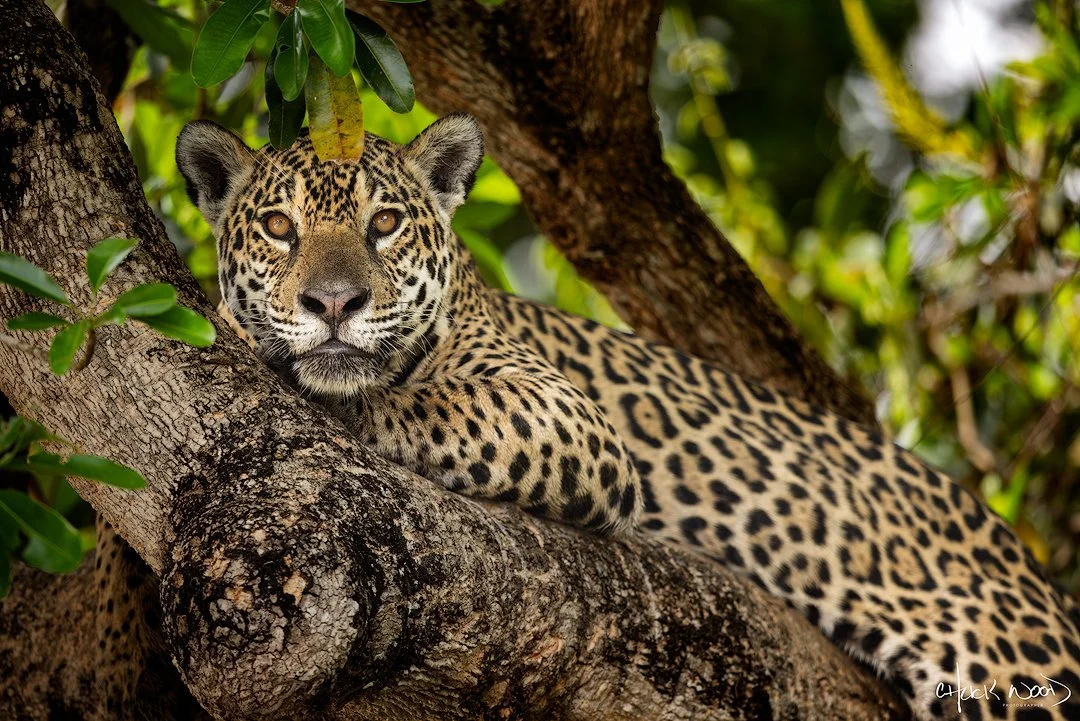
Destination: The Pantanal
The Pantanal is a large, tropical wetlands located on Brazil’s remote western border with Paraguay and Bolivia, far from the carnivals, favelas and beaches of Rio. Each year the Pantanal cycles through a wet season, during which as much as 80% of its area floods, and a dry season where the waters recede, concentrating the wildlife along the rivers, creeks and ponds that remain. To get a sense of the scale of the Pantanal, know that it is estimated to be somewhere between 55,000 and 75,000 square miles in size (I imagine that it can be difficult to draw a precise boundary around such a large area that is constantly changing over the course of the year.)
Because of the concentration of wildlife along the waterways during the dry season, it is one of the most reliable areas to see jaguars, who hunt capybara (a very large, semi-aquatic rodent, about the size of a medium-large dog), and caiman (a smaller relative of the American alligator.) Other animals to be found in the Pantanal include howler and capuchin monkeys, giant anteaters, giant river otters, tapirs and over 650 species of birds.
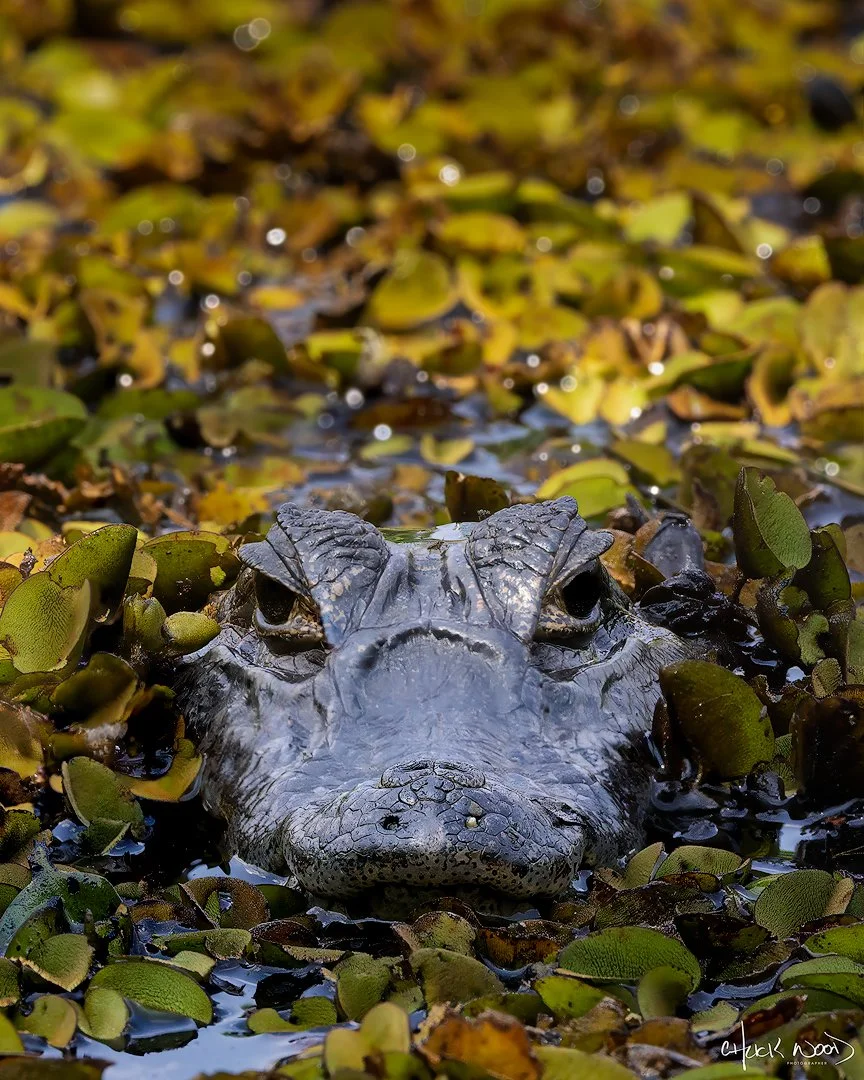
Caiman
I‘ve long wanted to visit the region, and finally had the opportunity to do so this year. Access to the Pantanal is via Cuiabá, a small Brazilian city nearly dead smack in the middle of South America. From there it is a six hour drive along the Transpantaneira, a bumpy dirt road that crosses over 120 small bridges as you make your way to Porto Jofre, the staging point for accessing the northern Pantanal waterways. I was struck by how similar the area was to southern Africa’s savannahs, and more specifically to Botswana’s Okavango delta, which also cycles each year through flood and drought.
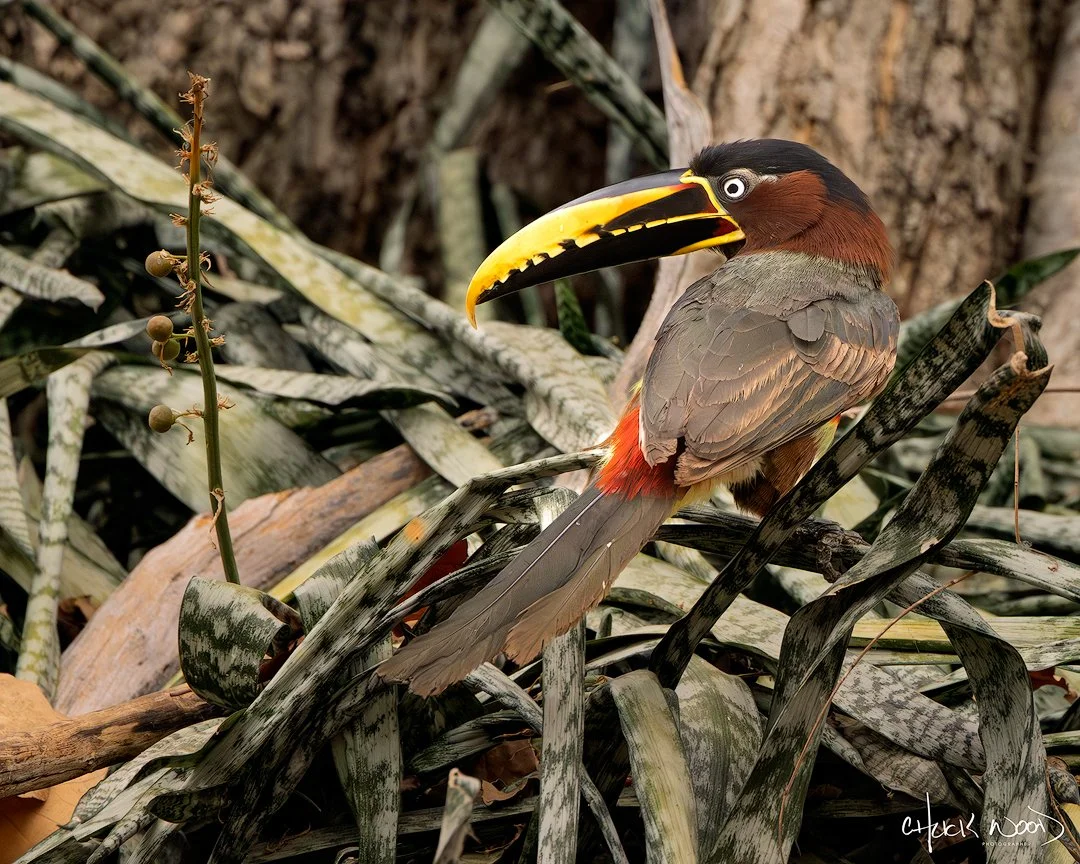
Chestnut-eared Aracari
The Apex Predator: Jaguars
Though jaguars range from Mexico down through Central America, Northern Southern America and into many areas of Brazil, with a total population estimated at approximately 170,000, they are most highly concentrated in the Pantanal. Each day during the week that I was in Porto Jofre, we would spend several hours patrolling the network of rivers and channels, searching for jaguars, and each day we saw several. Almost all of them had been given names by the local guides, and being highly territorial, we often found the same individual in the same general area each day.
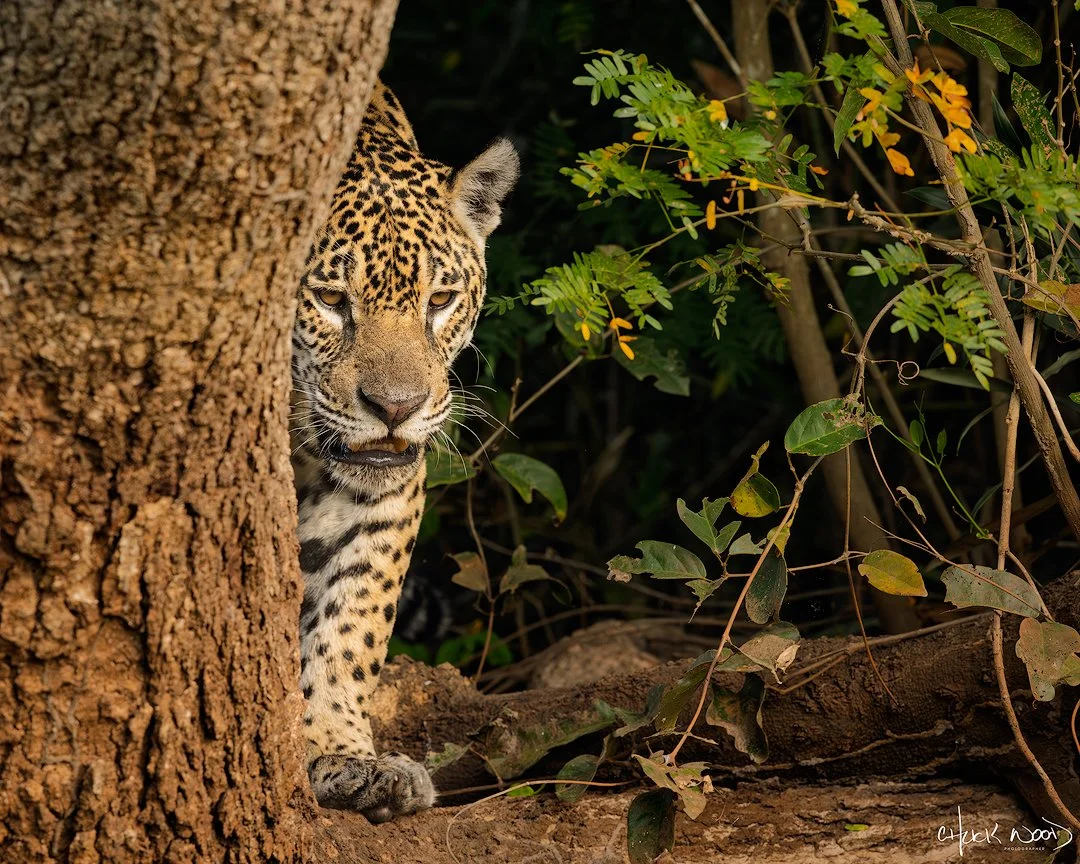
Unlike other big cats, Jaguars have adapted to water and almost seem to enjoy swimming for its own sake. Their hunting strategy can be summed up as “ambush and attack”, which has taken some unusual forms. For example, there is a small group of related females that have developed the strategy of waiting in trees overhanging the river, and when an unsuspecting caiman happens to approach, they drop from the tree onto the caiman’s back. Another actually dives underwater to catch its prey from underneath. The jaguar’s bite is one of the strongest in the animal kingdom, and they typically kill by plunging their fangs directly into their prey’s skulls.
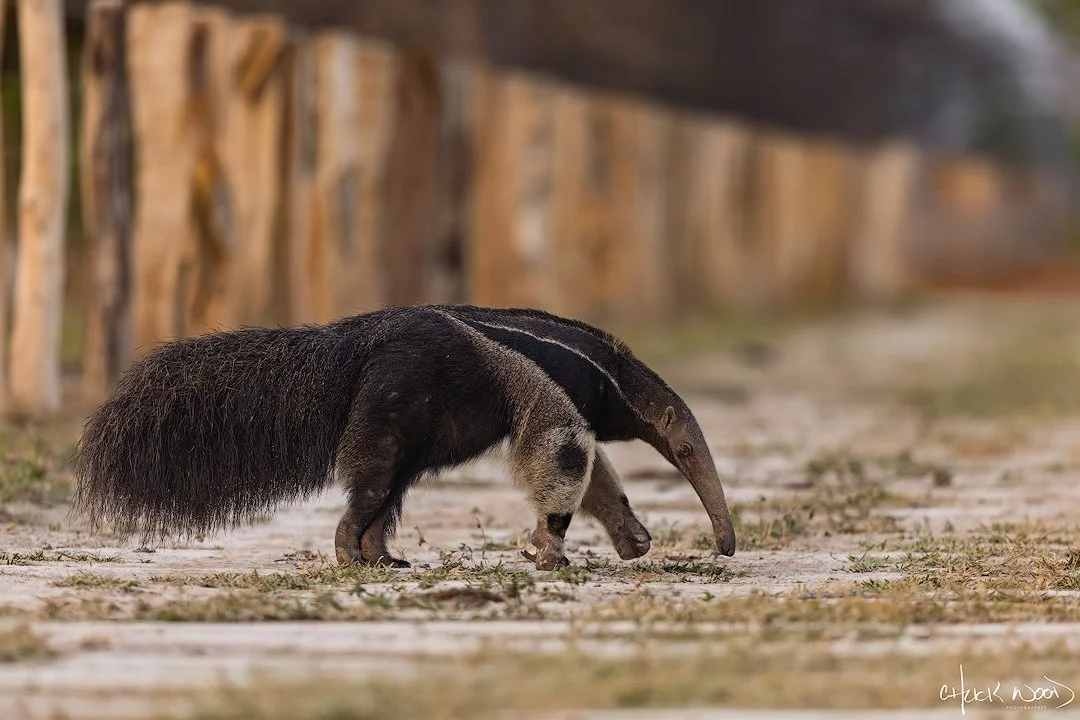
Giant Anteater
More Than Just Jaguars: Caiman, Capybara and The Birds
But the Pantanal is more than just jaguars, and in the two weeks I was in the area I saw giant anteaters, ocelots, coatimundis, tapirs, howler monkeys, marmosets, capuchin monkeys, caiman, capybaras, crab eating fox, tapir, giant river otters, anaconda and some of the most colorful birds I’ve ever seen, including jabiru, hyacinth macaws, toco toucan, capped heron, chestnut-eared aracari and the utterly unique helmeted manakin.
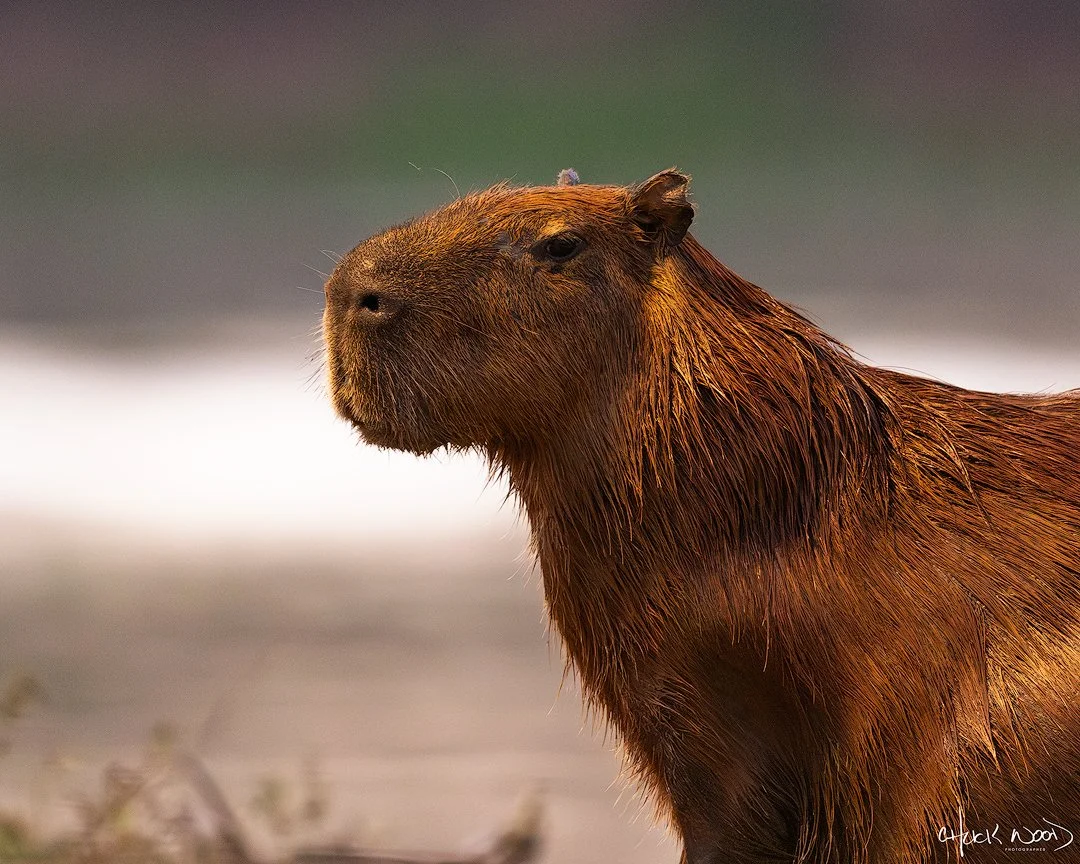
Capybara
The Future
While it was very hot and very humid, the Pantanal impressed me as a beautiful, vibrant area worthy of more time than I was able to give it on this trip, and I hope to be able to return soon. Like many ecosystems around the world, the Pantanal is threatened by climate change, and the specter of wildfires during the dry season is a real concern. But while Brazil has instituted strong laws to restrict hunting and to protect wildlife, there remain issues related to jaguar-human conflict, notably jaguars preying on livestock. During my trip I spent some time with two NGOs devoted to addressing these issues (Impacto and the Jaguar Identification Project) and that gives me optimism that the Pantanal is loved and being watched over.